

Updated January 2026
Wheelchair ramps are far more than simple conveniences—they represent a fundamental shift toward accessibility, independence, safety, and inclusivity in everyday life. Our world is full of uneven surfaces: steps at home entrances, raised thresholds, curbs, porches, vehicle doors, and public pathways. For anyone with limited mobility—whether due to permanent conditions like spinal cord injuries, multiple sclerosis, or arthritis, or temporary issues like recovery from surgery, injury, or age-related weakness—these barriers can turn routine tasks into major obstacles.
Wheelchair ramps (or mobility ramps more broadly) bridge these gaps, creating smooth, gradual inclines that allow people using wheelchairs, scooters, walkers, canes, or even strollers to move safely and confidently. The benefits extend well beyond the individual user, positively impacting families, caregivers, friends, communities, and even businesses. Below, we'll explore these advantages in depth, drawing on real-world implications, health data, and practical examples.
Easy Entrance and Exit: Unlocking Daily Freedom

Pathway 3G Modular Access Ramp System by EZ Access
The most immediate and transformative benefit of a wheelchair ramp is improved accessibility for entering and exiting spaces.
Imagine dreading every trip out the door because it requires being lifted, carried, or awkwardly maneuvered down steps. For many people with mobility challenges, this anxiety leads to avoiding outings altogether—postponing doctor visits, family gatherings, errands, or simply enjoying fresh air. A well-designed ramp eliminates this dread.
- For the user: It restores the ability to come and go independently, without relying on others for basic movement. This fosters a profound sense of control over one's schedule and environment.
- For caregivers and family: The physical and emotional burden lightens—no more straining to assist or worrying about accidents during transfers.
- Real impact: Accessible entrances encourage more frequent outings, from grabbing the mail to attending social events. This increased activity supports physical health (e.g., better circulation, muscle maintenance) and mental well-being.
In short, ramps turn "I can't" into "I can," opening doors—literally—to a fuller life.
Promoting Independence and a Positive Mindset
Independence is one of the most cherished aspects of human dignity, and mobility limitations can erode it quickly. A ramp directly counters this by enabling self-reliance.
When someone can leave their home unaided, they reclaim agency: running errands, visiting friends, pursuing hobbies, or even returning to work or education. This autonomy often leads to improved mental health—reduced feelings of helplessness, higher self-esteem, and a more optimistic outlook.
Research highlights how mobility aids like ramps preserve function and quality of life, especially for aging manual wheelchair users or those with progressive conditions. By reducing dependence on caregivers, ramps can delay or prevent the need for long-term care placements, allowing people to age in place comfortably.
The psychological boost is significant: reclaiming mobility often translates to reclaiming purpose and joy in daily life.
Enhancing Safety: Reducing the Risk of Falls and Injuries
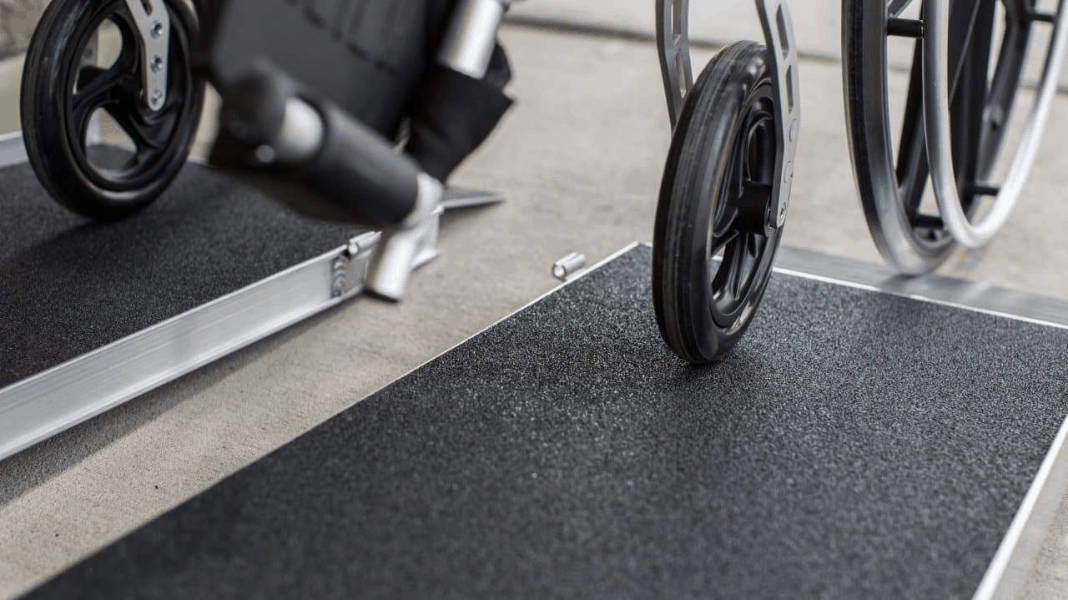
Wheelchair on the surface of the SUITCASE Singlefold AS Portable Ramp by EZ Access
Stairs pose one of the greatest dangers for people with mobility impairments. For wheelchair users, they're often impassable without assistance. For those using walkers or canes, attempting stairs risks loss of balance, especially if strength, coordination, or vision is compromised.
Falls are a major public health concern:
- More than 1 in 4 older adults (aged 65 and older) falls each year, with over 14 million reporting a fall annually.
- Each year, falls lead to about 3 million emergency department visits and roughly 1 million hospitalizations among older adults.
- In 2023, the unintentional fall death rate for adults 65+ was 69.9 per 100,000 population, with rates increasing sharply with age (e.g., over 300 per 100,000 for those 85+) and higher among men than women.
- Falling once doubles the risk of falling again, creating a cycle of fear and reduced activity.
A properly sloped, non-slip ramp removes this hazard by providing a stable, gradual path. It also benefits caregivers, who face injury risks when lifting or supporting someone on stairs. Home modifications like ramps have been shown to lower fall rates significantly in some programs, building confidence and reducing fear of falling—which itself can limit mobility further.
Building Confidence, Family Unity, and Social Connections

Gateway 3G Portable Access Ramp by EZ Access
A ramp does more than provide physical access; it sends a powerful message of inclusion and support.
For the person with limited mobility, it boosts confidence—knowing they can navigate safely encourages exploration and participation. This can strengthen family bonds: everyone moves freely, reducing feelings of isolation or being a "burden." Shared activities become possible again—family dinners, holidays, or casual visits.
Social isolation and loneliness are serious issues for older adults and people with disabilities:
- About 1 in 3 U.S. adults report feeling lonely, with older adults at higher risk; loneliness is linked to increased chances of depression, dementia, heart disease, and earlier death.
- In a 2025 AARP study, 40% of U.S. adults aged 45+ reported being lonely (up from 35% in prior surveys), with higher rates among men and those in midlife.
Mobility barriers exacerbate this by limiting outings, visits, and community engagement. Ramps help combat this by enabling travel to parks, lakes, friends' homes, or public events. They make spontaneous social interactions feasible—like dropping by for coffee—reducing isolation and fostering meaningful connections.
The Unique Value of Portable Ramps: Flexibility for Any Situation

While permanent ramps (built-in, often modular aluminum or concrete) offer long-term stability for home entrances and comply with guidelines like the ADA's recommended 1:12 slope (1 foot of ramp per inch of rise) for safety, portable ramps add versatility.
Portable options—like foldable, lightweight aluminum models—are ideal for:
- Vehicles (e.g., loading/unloading a wheelchair into a car or van).
- Visiting non-accessible homes or locations.
- Travel, recreation, or temporary needs (post-surgery recovery).
- Overcoming unpredictable barriers in public spaces.
They empower users to explore new places with confidence, knowing they can bring their access solution. For recreation—picnics, parks, or lakeside outings—portables make activities that once felt off-limits become routine.
Not Just for Wheelchairs: Broad Benefits for Everyone
Ramps embody the "curb-cut effect"—improvements designed for one group often help many others.
- Parents pushing strollers navigate more easily.
- Seniors or shoppers use carts or walkers without struggling.
- Delivery workers, travelers with luggage, or anyone with temporary injuries benefit.
- Businesses gain wider appeal by welcoming all customers.
This universal design principle makes spaces more equitable and practical for diverse needs.
In Summary
Wheelchair ramps profoundly improve quality of life by addressing physical barriers, enhancing safety, restoring independence, reducing isolation, and promoting inclusion. They prevent injuries, support mental health, strengthen relationships, and enable fuller participation in society.
With so many options—permanent for lasting home access, portable for on-the-go flexibility—finding the right ramp can be straightforward. If you're exploring solutions, expert guidance ensures the best fit for safety, usability, and specific needs.
(Grateful acknowledgment to accessibility experts at EZ Access for insights that informed aspects of this overview.)
Updated January 2026
